By Finnley Brennan ’30
Whether you love it or hate it, one thing is clear: AI – Artificial Intelligence – will be a part of our future. But how willing is the future generation to accept AI? That’s what I set out to find. I sent out a Google Form to every Upper School student to see their opinion on whether AI has a place in education or not.
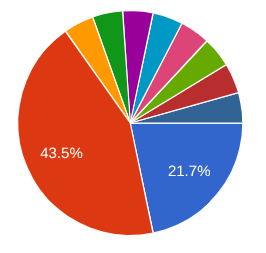
As you can see, the results were mixed. Which, after reading the “Other” categories, seems to be the general census of the students. “I believe that AI is a powerful tool when used properly, to help learn instead of [giving] answers,” Rachel Atwal ‘30 wrote. For her, along with other students, it depends on the context in which you use AI.
However, some students believe that AI has no place in school whatsoever. Sophia Roper ‘28 claimed, “AI and its usage is actively dumbing students down. I don’t see the point in getting an education if you’re going to let AI hold your hand the entire time.” She also asks the question, “Why would students even go to school if they don’t want to learn?” Most of the people who responded against AI were more firm in their opinions. They spoke a lot about AI diminishing creativity and critical thinking skills.Then, there’s the students who don’t see any issue with AI, believing that AI’s benefits outweigh the possible side effects. Although, it was harder to find anyone writing a statement in support of AI; the most AI-positive response was from Remy Turrell ‘27. “AI should be treated as a tool. It will not be going away anytime in the near future, and being up to date with technology will only make you stronger both academically and professionally. The next steps are figuring out a way to make AI usage sustainable.” Even still, she isn’t fully praising AI, as seen by her response.
Only a select number of people either completely dismissed or were in total support of AI. Most of the students who responded leaned more towards the middle. A lot of replies were structured like, “Well it’s good for x, but shouldn’t be used for y.” A great example of this is a response from Dana Jung ‘30: “I believe that it can be quite helpful for studying . . . I do not think it should be used in class. Since during class, students usually do classwork, most would probably feel compelled to use it on their work, which takes away the value of preparing for assessments yourself and thus ingraining material more deeply into your brain.”
I think a safe conclusion is that most Upper School students feel that AI should not be involved in a majority of schoolwork, but it has its upsides. The future isn’t clear, but one thing is: it’s important to take the time and think about what you believe.