Artificial Intelligence: How do Students Feel?

By Finnley Brennan ’30

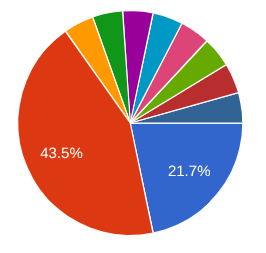
Whether you love it or hate it, one thing is clear: AI – Artificial Intelligence – will be a part of our future. But how willing is the future generation to accept AI? That’s what I set out to find. I sent out a Google Form to every Upper School student to see their opinion on whether AI has a place in education or not. 

As you can see, the results were mixed. Which, after reading the “Other” categories, seems to be the general census of the students. “I believe that AI is a powerful tool when used properly, to help learn instead of [giving] answers,” Rachel Atwal ‘30 wrote. For her, along with other students, it depends on the context in which you use AI. 

However, some students believe that AI has no place in school whatsoever. Sophia Roper ‘28 claimed, “AI and its usage is actively dumbing students down. I don’t see the point in getting an education if you’re going to let AI hold your hand the entire time.” She also asks the question, “Why would students even go to school if they don’t want to learn?” Most of the people who responded against AI were more firm in their opinions. They spoke a lot about AI diminishing creativity and critical thinking skills.Then, there’s the students who don’t see any issue with AI, believing that AI’s benefits outweigh the possible side effects. Although, it was harder to find anyone writing a statement in support of AI; the most AI-positive response was from Remy Turrell ‘27. “AI should be treated as a tool. It will not be going away anytime in the near future, and being up to date with technology will only make you stronger both academically and professionally. The next steps are figuring out a way to make AI usage sustainable.” Even still, she isn’t fully praising AI, as seen by her response. 

Only a select number of people either completely dismissed or were in total support of AI. Most of the students who responded leaned more towards the middle. A lot of replies were structured like, “Well it’s good for x, but shouldn’t be used for y.” A great example of this is a response from Dana Jung ‘30: “I believe that it can be quite helpful for studying . . . I do not think it should be used in class. Since during class, students usually do classwork, most would probably feel compelled to use it on their work, which takes away the value of preparing for assessments yourself and thus ingraining material more deeply into your brain.”

I think a safe conclusion is that most Upper School students feel that AI should not be involved in a majority of schoolwork, but it has its upsides. The future isn’t clear, but one thing is: it’s important to take the time and think about what you believe.
Kiddo Kindness: Where Creativity and Community Collide

By Chiara Volonakis ‘29

Here at Wyoming Seminary, we are all about community. Students and faculty alike want to do all we can to give back to our school, and also to the world outside of the SEM sphere. To keep the student body focused on that goal, each scholar is required to complete 10 hours of community service per year spent at the Upper School. Unfortunately, with lots of other activities taking up students’ time, it can be a challenge to fit community service trips into our routine. Thus, hard-working SEM students came up with a solution: Kiddo Kindness! It’s a new club founded this year that can help students connect with the local community and unlock their creativity without all the scheduling and heavy lifting.

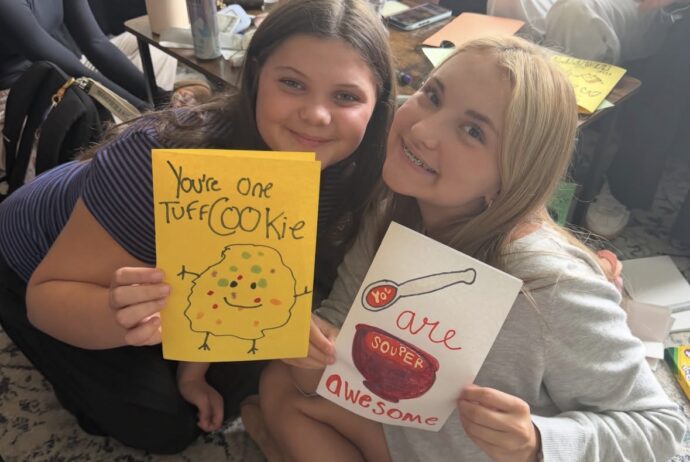
Kiddo Kindness is a nonprofit organization that partners with schools and children’s hospitals. Through the chapter within their school, students make cards sending positivity or care packages, which are sent to local pediatric patients. Students can also obtain community service hours through the program. For every four cards or one care package sent, one hour of service is completed. This sounded enticing to Kashish Patel ‘30, the founder of SEM’s Kiddo Kindness chapter. Kashish wanted to find a meaningful way to attain community service hours, but that would prove challenging due to other extracurricular commitments. Her search brought her to Instagram, where she first learned about the Kiddo Kindness program. “It sounded like a good opportunity,” she said, “with just a few markers and some paper, I was able to make a real impact.” With this spark of inspiration, Kashish reached out to Kiddo Kindness and local hospitals to kickstart SEM’s chapter.

Of course, starting a new club isn’t easy. “I didn’t think we’d have many people actually show up,” admitted Kashish, worried about whether the club would gain any traction. But through advice from family and emails to hospitals across NEPA, Kiddo Kindness was up and running. The club’s first card making was on September 15th, and the community support was incredible! Since then, the club has only grown, with many more card making meetings. “Being a kid who received ‘get well soon’ cards, and knowing that they always made my day, it’s important to me to support others in hospitals,” said Sasha Curtis ‘29 when asked what inspired her to join Kiddo Kindness. Her motives show the true goal this club is reaching towards: making a difference in the greater community.

Not only is the Kiddo Kindness an opportunity to help brighten the days of kids in less-than-cheery health situations, not only is it a convenient and fun way to get community service hours, but it’s also great for creative expression! Even if you’re not the best of artists, a meaningful card can go a long way. By sending these heartfelt cards to local children in hospitals, the purest values of SEM begin to shine through: the true feelings behind kindness cards, the beautiful doodles decorating these messages, and the good deeds this club aims to fulfill.